When The Irishman premiered on Netflix in 2019, the film divided critics and audiences alike. Some hailed it as a masterwork of gangster cinema; others found its three-and-a-half-hour runtime excessive. Amid this debate, one film quietly stood apart as a more grounded and emotionally charged exploration of organised crime: Kill the Irishman (2011).
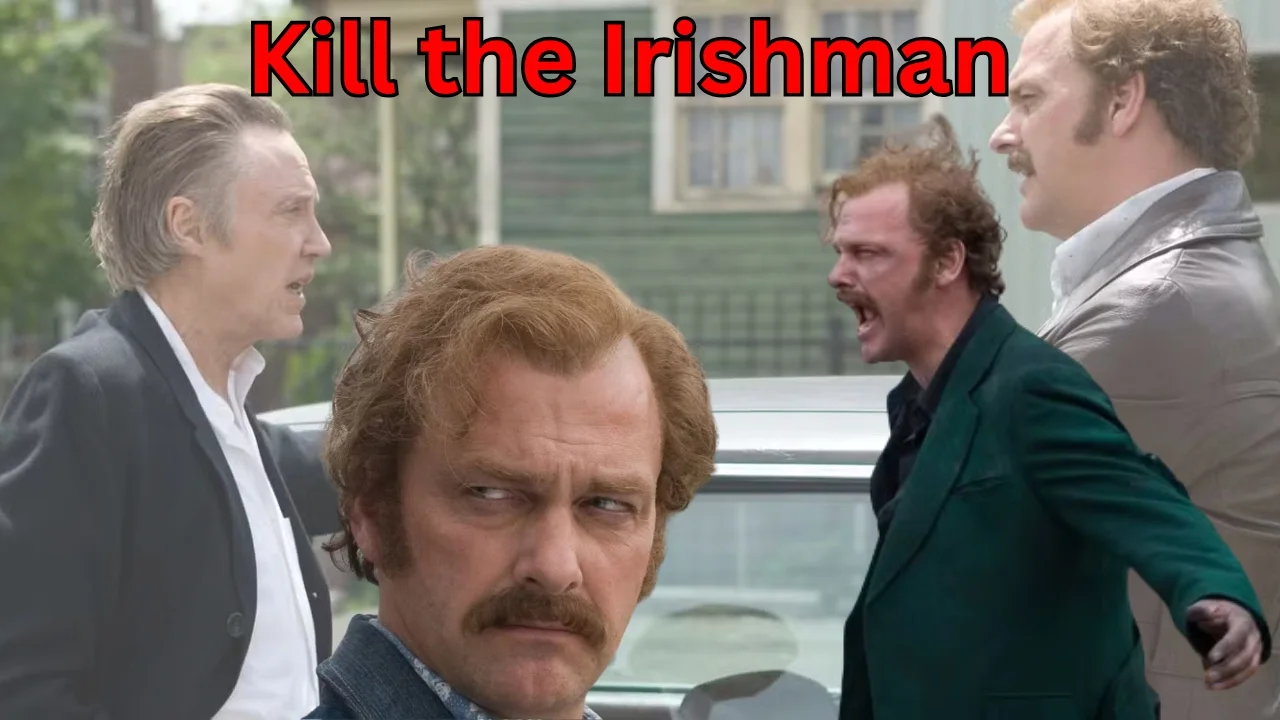
While The Irishman carried the prestige of an all-star cast and a legendary director, Kill the Irishman offered something rarer: authenticity. Starring the late Ray Stevenson as real-life Cleveland mobster Danny Greene and Val Kilmer as the detective tracking him, the film focuses on working-class America’s struggle with power, corruption, and survival.
As film historian Lara Simmons notes,
“Kill the Irishman doesn’t glamorize crime. It humanizes the men crushed beneath its weight — people who fought back in the only way they knew how.”
The Story Behind Kill the Irishman
Set in Cleveland during the 1960s and 1970s, Kill the Irishman chronicles Danny Greene’s transformation from a hardworking longshoreman to one of the most feared gangsters in Ohio’s history. Greene rises through union ranks, fighting corruption and becoming a folk hero to his working-class community.
But as he made alliances with mob bosses and later became an FBI informant, Greene’s life turned into a dangerous balancing act between loyalty, pride, and self-preservation. The film ends with his fatal assassination in 1977, a moment that ignited a war between Irish and Italian mobs and reshaped the criminal underworld in Cleveland.
Overview of Kill the Irishman
| Category | Details |
|---|---|
| Title | Kill the Irishman |
| Release Year | 2011 |
| Director | Jonathan Hensleigh |
| Main Cast | Ray Stevenson, Val Kilmer, Christopher Walken, Vincent D’Onofrio, Linda Cardellini |
| Genre | Crime / Biography / Drama |
| Setting | Cleveland, Ohio – 1960s–1970s |
| Based On | The true story of Danny Greene |
| Runtime | 106 minutes |
| Budget | ~$12 million budget; modest box office return ~$1.2 million |
| Initial Reception | 63% on Rotten Tomatoes — mixed to favorable reviews |
A Working-Class Crime Story
Unlike many gangster films that emphasize glamour, money, and self-indulgence, Kill the Irishman focuses on the life of a blue-collar man fighting corrupt systems. The film captures the working-class struggle of 1970s Cleveland, where jobs were disappearing and desperation ran high.
Danny Greene’s turn to crime stems not from greed, but from frustration with a broken system. As director Jonathan Hensleigh put it:
“He was an underdog in a town full of them.”
The film shows Greene not as a caricatured gangster, but as a man trying to survive and protect his people. Histories of union corruption, mafia control, and societal decay play out in the background, giving the story weight and realism often missing from mob dramas.
Ray Stevenson’s Humanization of a Folk-Hero
Ray Stevenson delivers a complex, magnetic performance as Danny Greene — equal parts brutality, pride, compassion, and tragedy. In a 2011 interview, Stevenson explained the film’s tone and approach:
“It’s really a testament to the movie and the actors that nobody brought any ego or status to the film.”
“When it’s a movie like Thor, which cost $150 million, you’re an important part of the engine. With Kill the Irishman, which had a budget of about $10 million, there’s more of a collective ownership… a collective piece of all of us in the movie.”
Stevenson also spoke about Greene’s contradictory nature a man capable of violence but also generous with his community, helping neighbors with rent or providing charity.
These statements give weight to the film’s ambition: not to glorify crime, but to depict a flawed man balancing between desperation and redemption.
Highlight Moments & Iconic Lines from the Film
The movie also includes memorable dialogue that reflects its tone and Greene’s personality. Some standout lines:
- Grace O’Keefe: “We’re drunks, we’re fighters, we’re liars! But there’s a bit of good in every Irishman.”
- Danny Greene (after a car bombing attempt): “Is that all you got? Gonna take more than a few firecrackers, to kill Danny Greene!”
These lines reveal Greene’s defiance, his pride in his roots, and his survival instinct — central themes that run through the entire film.
Val Kilmer’s Quiet Power as Detective Manditski
While Ray Stevenson’s Greene commands the screen, Val Kilmer’s portrayal of Detective Joe Manditski provides the emotional counterbalance. Manditski isn’t a one-dimensional cop; he’s tired, reflective, and morally conflicted the law man who sees more than just criminals.
Kilmer’s performance adds subtle shades of humanity and sorrow to the film’s gritty narrative. He embodies the struggle of a law enforcer caught between duty and empathy, highlighting the moral ambiguity that defines Kill the Irishman.
Themes: Pride, Morality, and the Decline of the American Worker
At its core, Kill the Irishman is not just about crime; it’s about identity, survival, and rebellion. Greene represents a working-class man fighting back against exploitation and corruption. His Irish-American heritage, his union leadership, and his populist impulses make him a complex figure, neither saint nor demon, but deeply human.
Director Hensleigh emphasized this complexity:
“Look, this guy was a murderer. The film is not suggesting he was a hero. But we do strike a balance between the things he did for people.”
That moral balance, the film’s refusal to either glorify or entirely condemn Greene, is a rare and powerful decision in gangster cinema.
Comparing Kill the Irishman, Goodfellas, and The Irishman
| Aspect | Kill the Irishman (2011) | Goodfellas (1990) | The Irishman (2019) |
|---|---|---|---|
| Tone | Gritty, working-class realism | Glamorous, high-octane crime | Reflective, somber, elegiac |
| Main Character | Danny Greene — working-class gangster with moral duality | Henry Hill — thrill-seeking mobster | Frank Sheeran — aging hitman filled with regret |
| Moral Focus | Pride, community, survival | Ambition, excess, downfall | Remorse, loneliness, mortality |
| Runtime | 106 min | 146 min | 209 min |
| Audience Appeal | Raw realism, blue-collar grit | Stylish crime drama fans | Art-house and epic-crime audiences |
This comparison highlights how Kill the Irishman stands apart through its tone and moral grounding not as a copy, but as a unique, character-driven narrative.
Cinematic Craftsmanship: Direction and Tone
Director Jonathan Hensleigh achieves more with less. On a modest budget, the film recreates 1970s Cleveland with immersive detail from dockyards to dilapidated houses, from smoky bars to industrial decay. The result is a living, breathing backdrop that frames Greene’s story in the context of a city under pressure.
Stevenson’s raw acting, combined with Hensleigh’s steady direction and a moody soundtrack, turns Kill the Irishman into a crime drama that refuses to glamorise violence. Every decision, every betrayal, and every explosion in the film feels consequential, not flashy.
As Hensleigh said:
“He was an underdog in a town full of them.”
That underdog ethos permeates every frame.
Renewed Interest in 2025
Streaming platforms have given Kill the Irishman new life. On services like Kanopy, it has found a fresh audience craving realism and moral complexity. Film forums and retrospectives are re-examining it as a hidden gem a gangster film that speaks to more than crime.
In today’s world, where social inequality and economic hardship remain pressing issues, Greene’s story of a man fighting a corrupt system from the bottom feels more relevant than ever.
As one modern reviewer put it, the film “lives and breathes blue-collar desperation, not cinematic glamor.”
Why Kill the Irishman Still Matters?
Over a decade later, Kill the Irishman remains relevant because its themes mirror ongoing struggles economic instability, moral compromise, and the fight for dignity. Greene’s story reminds us that heroism and destruction often walk hand in hand.
The film’s grounded storytelling, raw performances, and historical authenticity make it a timeless entry in the gangster genre. It doesn’t glamorize gang life instead, it shows what desperation, loyalty, and pride can drive a man to do.
Ray Stevenson’s untimely passing has only amplified appreciation for his performance. His portrayal of Danny Greene stands as one of cinema’s great unsung achievements.
FAQs
Yes. It’s based on the life of Danny Greene, an Irish-American gangster who fought against the Cleveland Mafia in the 1970s.
As of now, Kill the Irishman is available on some streaming platforms and for digital rental, depending on the region.
Ray Stevenson said the film was a collective effort with no ego involved — “a collective piece of all of us in the movie.”
Director Hensleigh described Danny Greene as “an underdog in a town full of them.”
No. The tone is gritty and realistic. The film balances Greene’s violent actions with his community efforts and moral complexity, refusing to glorify his lifestyle.
Its blue-collar realism, moral ambiguity, focus on class struggle, and a protagonist rooted in working-class hardship not glamor or greed.
Absolutely. Its themes remain relevant, and performances, especially by Ray Stevenson, offer a nuanced, human portrayal of a man caught between survival and destruction.
