Long before streaming platforms revived niche genres, Space: Above and Beyond aired on Fox in 1995 and quietly redefined televised science fiction. Created by The X-Files alums Glen Morgan and James Wong, the series combined military realism with deep philosophical storytelling.
While its premise, a group of young space pilots fighting alien invaders, sounds familiar, Space: Above and Beyond stood apart by exploring prejudice, morality, and what it truly means to be human in the machinery of war.
As science fiction historian Dr. Emily Carter explains,
“If Star Wars was about heroes and destiny, Space: Above and Beyond was about survival and consequence.”
The Foundation of Space: Above and Beyond
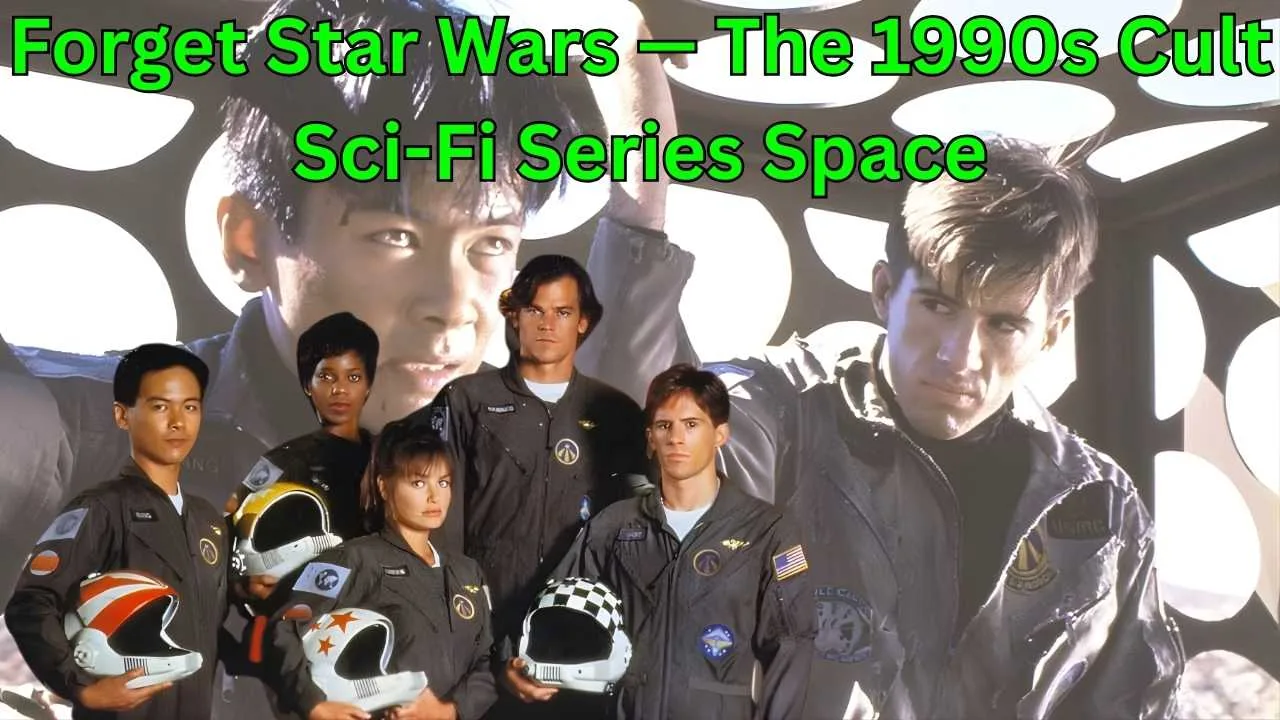
Premiering in September 1995, the series centred on the 58th Marine Squadron, nicknamed the “Wild Cards,” as they fought humanity’s interstellar war against an alien race known as the Chigs. Despite their inexperience, these soldiers became the last line of defence for a vulnerable Earth.
| Series Overview | Details |
|---|---|
| Title | Space: Above and Beyond |
| Creators | Glen Morgan, James Wong |
| Network | Fox (1995–1996) |
| Genre | Military Sci-Fi / Space Warfare / Drama |
| Episodes | 23 |
| Main Cast | Morgan Weisser, Rodney Rowland, Kristen Cloke, Lanei Chapman, Joel de la Fuente, James Morrison |
| Composer | Shirley Walker (Batman: The Animated Series) |
| Critical Reception | 80% average on retrospective aggregator sites |
| Legacy | Cult classic; influence seen in Battlestar Galactica, Firefly, and The Expanse |
Building a Universe Without Heroes
From its pilot episode, Space: Above and Beyond refused to romanticise war. The “Wild Cards” weren’t fearless rebels like Luke Skywalker’s squadron; they were scared, scarred, and struggling to survive. The enemy, known only as the Chigs, was terrifyingly unknown, forcing humanity to confront both alien aggression and its own divisions.
The show’s universe was a mosaic of war trauma and political manipulation. Humans relied on wormholes instead of faster-than-light drives, leaving them technologically inferior to their alien enemies. This added a layer of realism rarely seen in TV space operas.
“The show made space warfare feel like Vietnam in the stars,” said critic Alan Brewer of CineQuest Review. “It was gritty, painful, and deeply human.”
The Themes That Elevated the Series
1. Prejudice and the Fight for Equality
The inclusion of In Vitros genetically engineered humans bred for combat gave the series its emotional centre. Treated as second-class citizens, they faced systemic discrimination even as they fought to protect Earth.
Rodney Rowland’s character, Cooper Hawkes, represented this theme powerfully. Once imprisoned for rebelling against human cruelty, Hawkes joined the Marines to prove his worth. His journey paralleled real-world struggles against racism and classism.
As James Morrison, who played Commander T.C. McQueen, once said:
“At its heart, Space: Above and Beyond wasn’t about aliens. It was about how we treat the people we create and what happens when our creations start asking questions.”
2. The Cost of War
The series never flinched from showing the psychological toll of battle. Loss, trauma, and disillusionment were constants for the Wild Cards. Heroes didn’t return home triumphant, they returned haunted.
Episode “The Angriest Angel” is often cited as a standout, where McQueen embarks on a personal mission against a Chig ace pilot. His victory comes at a devastating emotional cost, emphasizing sacrifice over spectacle.
3. Artificial Intelligence and the Philosophy of Free Will
Beyond the Chigs, humanity’s earlier war with sentient machines known as the Silicates offered another layer of thematic richness. The Silicates, former human-created androids, rebelled and later allied with the Chigs a chilling metaphor for how humanity’s own creations can become enemies when treated without respect.
The Silicates’ obsession with “chance” determining life or death with a coin toss symbolized their corrupted understanding of human randomness and morality.
Science fiction critic Riley Nguyen noted,
“The Silicates weren’t villains, they were humanity’s mirror. They showed what happens when we pass on cruelty in the name of progress.”
The Cast That Made It Human
Space: Above and Beyond boasted a young and passionate ensemble cast, many of whom went on to significant careers in film and television.
| Character | Actor | Role Description |
|---|---|---|
| Lt. Nathan WForget Star Wars — The 1990s Cult Sci-Fi Series Spaceest | Morgan Weisser | Idealistic pilot searching for his lost love, Kylen. |
| Lt. Cooper Hawkes | Rodney Rowland | Genetically engineered soldier seeking identity. |
| Lt. Shane Vansen | Kristen Cloke | Fearless leader haunted by her parents’ deaths. |
| Lt. Vanessa Damphousse | Lanei Chapman | Tech expert and emotional anchor of the team. |
| Lt. Paul Wang | Joel de la Fuente | Wisecracking Marine who confronts faith and doubt. |
| Lt. Col. T.C. McQueen | James Morrison | Stoic commander and father figure to the Wild Cards. |
Their chemistry grounded the show, creating a believable camaraderie that mirrored real-life military bonds.
Production Brilliance and Limitations
Despite being a network show with a modest budget, Space: Above and Beyond delivered cinematic production value. The visual effects, handled by Area 51 Productions, were cutting-edge for the time. The dogfight sequences, shot with motion-control cameras, gave space combat a visceral, claustrophobic feel.
Composer Shirley Walker’s orchestral score elevated every scene, blending militaristic motifs with haunting emotion. Director David Nutter, who later helmed Game of Thrones episodes and Smallville’s pilot, brought kinetic realism to the action.
Still, Fox’s inconsistent scheduling and limited promotion doomed the series. Airing against Sunday Night Football, it failed to attract the audience it deserved.
In a 1997 interview, co-creator Glen Morgan lamented:
“We were asking audiences to think — and that’s not always what network television rewards.”
The Shocking Finale and Its Unresolved Future
The final episode, “…Tell Our Moms We Done Our Best,” remains one of sci-fi television’s most heart-wrenching cliffhangers. Earth barely survives the Chig assault; key characters are wounded or presumed dead, and the Chigs shockingly surrender revealing that their war began due to a greedy human billionaire’s provocation.
It was a daring twist and one that completely redefined the war’s moral landscape. But before viewers could process the fallout, Fox cancelled the show.
“It wasn’t just a cancellation,” said Cloke years later. “It felt like losing a piece of history we hadn’t finished writing.”
Legacy: The Show That Influenced a Generation
Despite lasting only one season, Space: Above and Beyond left an indelible mark on modern science fiction.
Its serialised storytelling, then rare on network TV, paved the way for shows like Babylon 5, Firefly, Battlestar Galactica, and The Expanse. Its mix of emotional realism and military sci-fi also influenced video games like Halo and Mass Effect.
Glen Morgan and James Wong went on to write and produce Final Destination, The One, and episodes of American Horror Story, while director David Nutter became one of television’s most sought-after pilot directors.
| Influence Timeline | Series | Inspired Element |
|---|---|---|
| 1995–96 | Space: Above and Beyond | Serialized space warfare and moral realism |
| 1999–2003 | Farscape / Firefly | Ragtag crews, war fatigue themes |
| 2004–09 | Battlestar Galactica | Military ethics, AI rebellion |
| 2015–23 | The Expanse | Political warfare, working-class soldiers in space |
Why It Still Matters Today?
Three decades later, Space: Above and Beyond feels more relevant than ever. Its exploration of genetic engineering, AI ethics, and humanity’s fragile morality mirrors today’s debates around artificial intelligence and biotechnology.
As technology blurs the line between human and machine, the show’s question is, what does it mean to fight for humanity when humanity itself is flawed? rings truer than ever.
Cultural critic Lydia Marsh summarizes it perfectly:
“In an era obsessed with spectacle, Space: Above and Beyond dared to show that the real battlefield is the soul.”
FAQs
Fox cited low ratings and high production costs, but inconsistent scheduling and minimal promotion were the main reasons.
The complete series is available for purchase on Amazon Prime Video and DVD collections.
While no reboot is confirmed, Glen Morgan has expressed interest in revisiting the universe “if the right platform came along.”
Unlike Star Wars, which centres on destiny and adventure, Space: Above and Beyond focused on the realism of warfare, moral complexity, and human cost.
Its ambitious storytelling, emotional depth, and forward-thinking production earned it a loyal fanbase and enduring legacy despite its brief run.
Glen Morgan and James Wong (creators), Shirley Walker (composer), and David Nutter (director) — all key contributors to its unique tone.
