Netflix’s 2025 lineup may be packed with blockbuster spectacles and big-budget dramas, but Left-Handed Girl stands out as something truly special, a small, human story that hits like a tidal wave.
Directed by Shih-Ching Tsou, best known as the longtime producing partner of Sean Baker, the film made its world premiere at Cannes Critics’ Week before Netflix acquired it for global distribution. The film has since earned acclaim across festivals and is now Taiwan’s official submission for the Best International Feature at the 2026 Oscars.
Intimate, tender, and politically charged, Left-Handed Girl weaves together generational trauma, female resistance, and cultural transformation through the lens of three women: a mother and her two daughters trying to rebuild their lives in Taipei.
Film critic Hannah Lee wrote,
“Left-Handed Girl is one of the rare films that captures the quiet dignity of survival. Every frame feels lived-in, every emotion feels earned.”
Overview: Key Details About ‘Left-Handed Girl’
| Category | Details |
|---|---|
| Title | Left-Handed Girl |
| Director | Shih-Ching Tsou |
| Producers | Sean Baker, Shih-Ching Tsou |
| Screenwriters | Sean Baker & Shih-Ching Tsou |
| Production Company | Le Pacte |
| Language | Mandarin |
| Runtime | 1 hour 52 minutes |
| Filming Format | Shot entirely on iPhone |
| Main Cast | Janel Tsai, Shih-Yuan Ma, Nina Ye |
| Netflix Release | December 2025 |
| Festivals | Cannes Critics’ Week, Toronto International Film Festival |
| Academy Awards Submission | Official 2025 Taiwanese entry for Best International Feature |
Plot: When Tradition Becomes a Cage
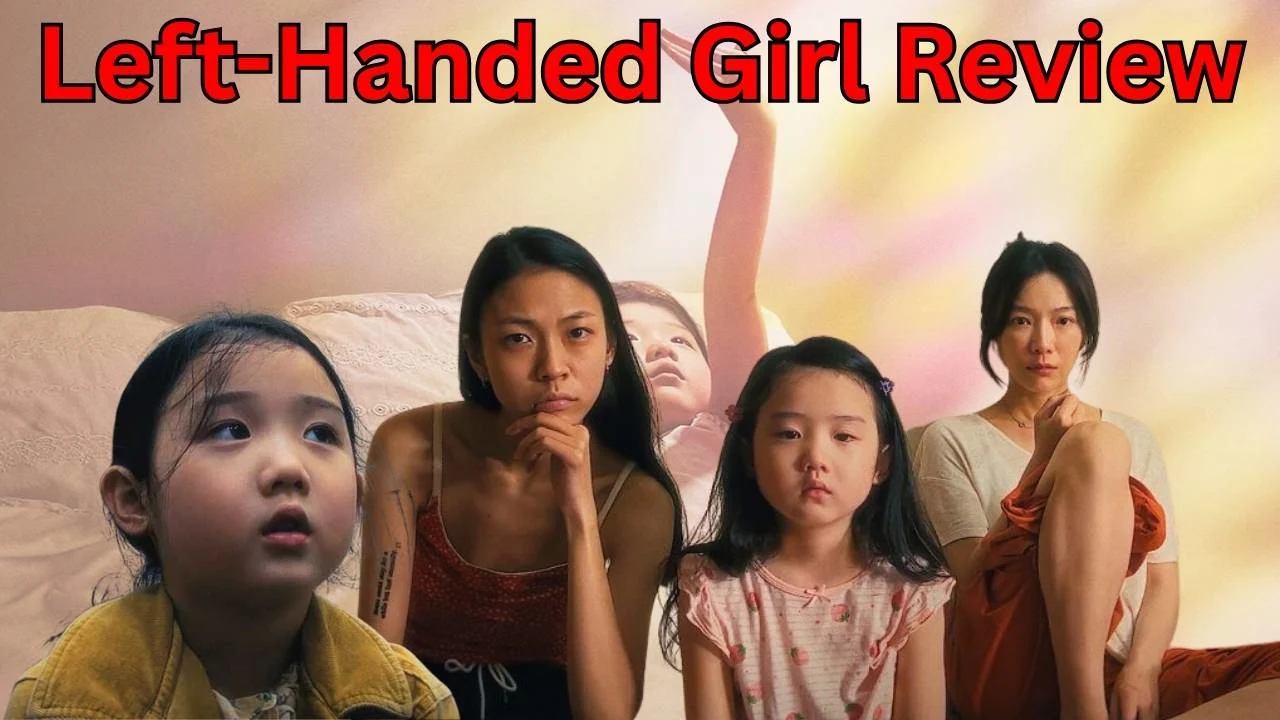
Set in the bustling night markets of modern Taipei, Left-Handed Girl follows Shu-Fen (Janel Tsai), a single mother who moves back to the city after years in the countryside, hoping to start fresh with her daughters, I-Ann (Shih-Yuan Ma) and I-Jing (Nina Ye). The three open a noodle stall, struggling to earn enough to survive while navigating the judgment of Shu-Fen’s conservative family.
When the girls’ traditional grandfather forbids I-Jing from using her dominant left hand, calling it “the devil’s hand”, old family tensions erupt. What begins as a small act of superstition spirals into a generational reckoning over shame, independence, and female agency.
Each woman carries her own burdens: Shu-Fen bears the scars of an abusive marriage; I-Ann fights to reclaim her lost education and self-worth; I-Jing discovers the cruelty of societal expectations for women and children alike. Their intertwined stories culminate in a heart-stopping finale that confronts decades of patriarchal pain.
Themes: Family, Culture, and Rebellion
1. The Stigma of Left-Handedness
At its surface, Left-Handed Girl uses a simple cultural superstition, the shame around left-handedness, as a metaphor for nonconformity in a rigid society. For I-Jing, her left hand represents independence and creativity, but to her family, it symbolises rebellion and bad luck.
2. The Weight of Generational Trauma
Through Shu-Fen’s battle with her father’s disapproval and her ex-husband’s abuse, the film portrays how trauma is inherited and internalized across generations. The narrative reveals that freedom, for women in traditional cultures, often comes at the price of exile.
3. Female Solidarity and Survival
Despite their conflicts, the mother and daughters’ journey evolves from isolation to solidarity. By the film’s cathartic end, they reject not just patriarchal control but also their own internalized shame symbolically freeing their “left hands” to rebuild their lives on their own terms.
Cultural critic Evelyn Wong remarked,
“Tsou turns a family’s domestic pain into a universal story of resistance. Left-Handed Girl is not just about women defying men — it’s about women finally believing in themselves.”
Performances: A Trio of Powerhouse Women
The performances in Left-Handed Girl elevate its raw realism into emotional transcendence.
Janel Tsai as Shu-Fen
Known for her work in The Fierce Wife, Tsai delivers a career-best performance as a woman haunted by regret yet unbreakable in her love for her children. Her portrayal of maternal endurance grounds the film’s chaos in warmth and humanity.
Shih-Yuan Ma as I-Ann
As the fiery elder daughter, Ma brings both rage and vulnerability. Her scenes, particularly her confrontations with her mother and predatory boss, pulse with authenticity and heartbreak.
Nina Ye as I-Jing
The youngest cast member, Ye’s performance is remarkable in its innocence and defiance. Through her wide-eyed curiosity and forbidden left hand, she becomes the lens through which we see Taipei’s contradictions: beauty and cruelty intertwined.
Direction: Shih-Ching Tsou’s Intimate Vision
Shih-Ching Tsou’s directorial debut is steeped in authenticity and empathy. Having collaborated with Sean Baker on Tangerine and The Florida Project, Tsou brings a similar vérité style blending documentary realism with lyrical storytelling.
The choice to film entirely on an iPhone adds immediacy and intimacy. The camera captures Taipei’s night markets in dazzling neon hues, while also exposing the harsh underbelly of poverty and gender inequity.
In one standout sequence, the camera follows I-Jing as she wanders through the glowing maze of street stalls, her left hand brushing against trinkets and treats. The moment feels like childhood wonder until a harsh reprimand from her grandfather shatters it.
As Tsou explained in an interview with Film Taipei:
“I wanted the film to feel like memory — imperfect, handheld, and human. The iPhone allowed me to be invisible, to let life unfold in front of the lens.”
Production and Collaboration with Sean Baker
| Production Aspect | Details |
|---|---|
| Cinematography | Handheld iPhone cinematography by Shih-Ching Tsou |
| Editing | Sean Baker & Shih-Ching Tsou |
| Music | Original score by Lee Yun-Ting |
| Filming Locations | Taipei & New Taipei City |
| Budget | Estimated $500,000 |
Working alongside Sean Baker, Tsou brings his grassroots storytelling ethos to Taiwan. Their collaboration prioritizes real environments and authentic performances from both professional and non-professional actors.
Baker praised Tsou’s artistic precision, saying in a Netflix press statement:
“Shih-Ching understands humanity at its rawest level. Left-Handed Girl is not just her debut — it’s her declaration.”
Comparative Table: Left-Handed Girl vs. Sean Baker’s Past Films
| Film | Director | Themes | Visual Style | Streaming Platform |
|---|---|---|---|---|
| Tangerine (2015) | Sean Baker | Friendship, survival, identity | Shot on iPhone, vibrant realism | Netflix |
| The Florida Project (2017) | Sean Baker | Childhood, poverty, hope | 35mm film, pastel visuals | Disney+ |
| Left-Handed Girl (2025) | Shih-Ching Tsou | Family, culture, patriarchy | iPhone realism, neon Taipei | Netflix |
This film is unmistakably Tsou’s — but its DNA carries Baker’s humanist touch.
Why ‘Left-Handed Girl’ Matters?
In a streaming era often dominated by spectacle, Left-Handed Girl proves there’s still room for quiet, personal cinema. It challenges the boundaries of what a Netflix “movie” can be an art film with real cultural weight.
By confronting patriarchal norms, class inequity, and female resilience, Tsou delivers one of the year’s most poignant portrayals of womanhood in transition.
Cinematographer Lee Yun-Ting summarized the film’s spirit beautifully:
“It’s not about being left-handed — it’s about learning to hold your own life in whichever hand still works.”
MVP: Shih-Ching Tsou – A Visionary Debut
After years of collaboration with Sean Baker, Tsou proves herself as a director of rare empathy and courage. Her command of tone balancing grit and grace marks her as one of Asia’s emerging auteurs.
Her decade-long dedication to crafting Left-Handed Girl, from field research in Taiwan to casting real street vendors, pays off in every authentic frame.
Recent Updates
- Netflix Global Release: December 15, 2025
- Awards Season Buzz: Strong contender for Best International Feature (Oscars 2026)
- Critical Acclaim: 94% on Rotten Tomatoes; “A masterpiece of realism and resistance.” — The Hollywood Reporter
- Festival Awards: Won Best Director at the Busan International Film Festival
FAQs
No, but it draws from real cultural traditions and Tsou’s own family experiences in Taiwan.
Director Shih-Ching Tsou chose iPhone cinematography for its intimacy and flexibility, similar to Sean Baker’s Tangerine.
The film is primarily in Mandarin with English subtitles.
It’s rated TV-MA for mature themes, including domestic abuse and sexual content.
Yes. Netflix holds exclusive worldwide streaming rights.
The title symbolises rebellion and nonconformity, representing the young daughter’s struggle against cultural prejudice.
