When Better Call Saul first premiered in 2015, it seemed like a gamble. How could a prequel about Saul Goodman, the comic relief lawyer from Breaking Bad, stand up to the monumental success of its predecessor? Yet, over the course of six remarkable seasons, Better Call Saul not only justified its existence but became one of the finest television series of the 21st century. One of the series’ defining moments came from a powerful line that encapsulated its central theme of moral decay and self-deception. This quote, spoken by Chuck McGill (Michael McKean), continues to resonate eight years later, offering a profound reflection on the complexities of human nature.
“The beauty of Better Call Saul is in its subtlety. Chuck’s final words to Jimmy are the culmination of a series that is about the gradual erosion of a man’s soul, and it still resonates powerfully years later,” says TV critic Emma Peters.
Overview: The Heart of Better Call Saul
Better Call Saul was a show that continually surprised its audience, offering a slow-burn, character-driven narrative rather than the explosive action that Breaking Bad was known for. The series, which ran from 2015 to 2022, explored the transformation of Jimmy McGill (Bob Odenkirk) into the morally ambiguous lawyer, Saul Goodman. Over six seasons, the show delved into themes of family, ambition, loyalty, and the cost of compromise.
| Feature | Details |
|---|---|
| Title | Better Call Saul |
| Run Time | 2015–2022 |
| Seasons | 6 Seasons (63 Episodes) |
| Platform | AMC, Netflix |
| Creator | Vince Gilligan, Peter Gould |
| Genres | Crime, Drama, Legal Drama, Thriller |
| Key Character | Jimmy McGill/Saul Goodman |
| Defining Quote | “In the end, you’re going to hurt everyone around you. You can’t help it, so stop apologizing and accept it — embrace it.” |
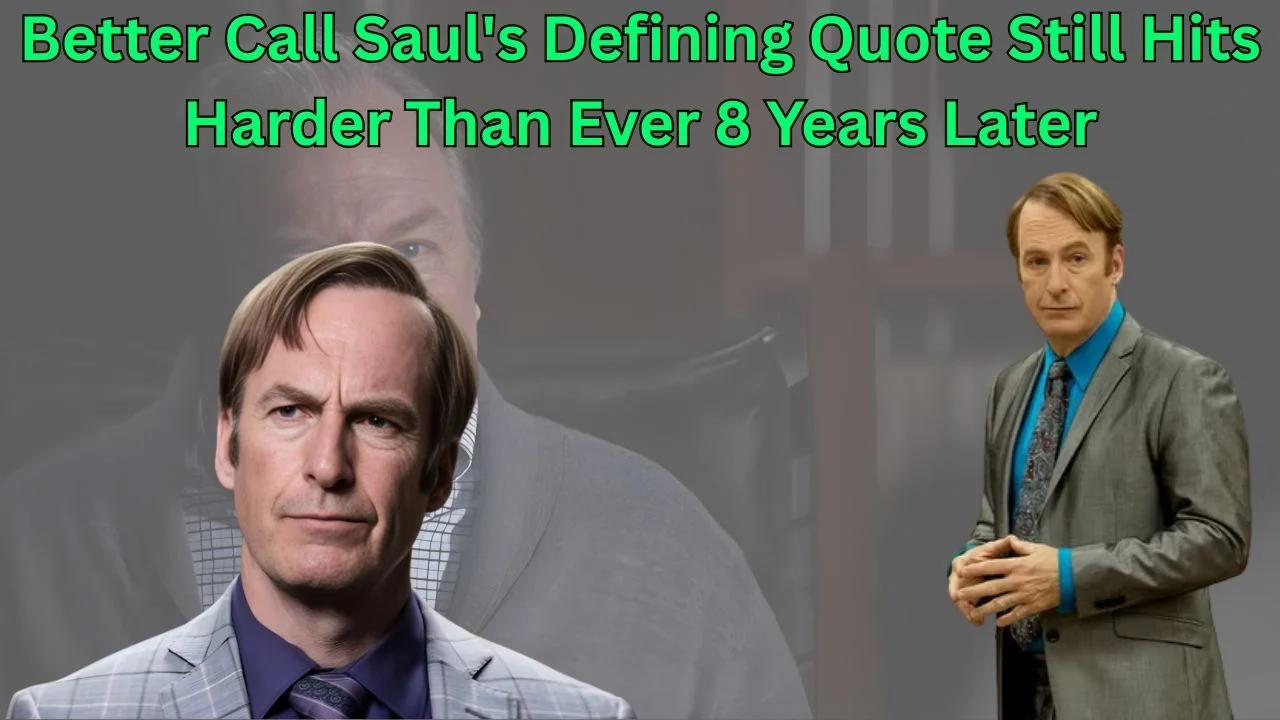
The Heart of Better Call Saul
Better Call Saul is a prequel that masterfully builds on the Breaking Bad universe, while also standing on its own merits. What made the show so compelling was its deep exploration of the internal and external struggles of Jimmy McGill, a man with the potential for greatness who gradually embraces his darker side.
“This quote perfectly sums up the tragic inevitability of Saul Goodman’s transformation. It’s a reminder that some people, no matter how much they want to change, can never escape their true nature,” notes television historian David Rowe.
The series focused heavily on Jimmy’s complex relationships, particularly with his older brother, Chuck McGill. Chuck, an esteemed lawyer, represents everything Jimmy could have been but isn’t. Their relationship forms the emotional core of the series, especially in the first few seasons. Jimmy’s desire for Chuck’s approval and his eventual betrayal of that relationship marks the turning point in his transformation into Saul Goodman.
Key Themes:
- Moral Ambiguity: The show focuses on why people make morally questionable decisions and how they justify their actions.
- Family Dynamics: The complex relationship between Jimmy and Chuck is at the center of the story, highlighting the destructive power of family expectations.
- Identity: Jimmy’s evolution into Saul Goodman is a tragic commentary on the impact of our choices, relationships, and the constant battle between self-deception and truth.
The Defining Quote: “You Can’t Help It, So Stop Apologizing”
In Better Call Saul’s third season finale, “Lantern,” Jimmy has an emotional confrontation with his brother, Chuck. Jimmy, desperate for redemption, seeks forgiveness for his past actions, particularly the forgery of legal documents. However, Chuck, in his final moments before his death, delivers a devastating line that encapsulates the essence of Jimmy’s transformation:
“In the end, you’re going to hurt everyone around you. You can’t help it, so stop apologizing and accept it — embrace it. Frankly, I’d have more respect for you if you did.”
This quote is not just a harsh indictment of Jimmy’s character but also a profound statement about human nature. It speaks to the idea that, despite our best efforts to change or seek redemption, certain traits and tendencies are inescapable. For Jimmy, his moral failings and desire for validation from his brother pushed him down a path of deception and criminality. Chuck’s brutal honesty serves as a wake-up call, forcing Jimmy to confront the truth of his own nature.
Impact of the Quote
This line acts as the thematic cornerstone for the entire series. It represents the moment Jimmy acknowledges that, deep down, he might never be the person his brother or anyone else wants him to be. It highlights the internal conflict that runs throughout the show: Jimmy’s internal struggle between his desire for approval and his own darker impulses.
The Heart of Better Call Saul: Jimmy and Chuck McGill’s Relationship
The conflict between Jimmy and Chuck is not just about law or career but about the fundamental desire for family approval. Chuck, despite his affection for his brother, is consumed by pride and fear of failure, which leads him to constantly undermine Jimmy. On the other hand, Jimmy, though filled with flaws, seeks only to be seen as a worthy person in his brother’s eyes.
This dynamic plays out in Better Call Saul’s most powerful moments, with Chuck frequently acting as an obstacle to Jimmy’s desires. Whether it’s Chuck’s refusal to acknowledge Jimmy’s potential or his decision to destroy Jimmy’s law career, Chuck represents the high moral standard that Jimmy can never fully achieve. Their relationship becomes a tragic commentary on how family relationships shape our identity and our choices.
Why This Quote Still Resonates?
Chuck’s final words to Jimmy are a scathing criticism, but they are also a harsh truth. As the series progresses, we see how Jimmy’s relationship with his brother shapes his descent into Saul Goodman, the morally bankrupt lawyer. By Season 5 and 6, Jimmy, now fully transformed into Saul, becomes a ruthless figure who manipulates everyone around him, including his wife, Kim Wexler.
“In the end, Better Call Saul is more than a prequel. It’s a story about the cost of ambition and the complexities of family dynamics. Chuck’s line serves as the anchor to everything that follows,” shares screenwriter and producer Tom Harris.
Despite his transformation, the spirit of Chuck’s words lingers throughout the series. Saul Goodman is a product of his circumstances, shaped by years of rejection, disappointment, and the pressure to be something he is not. This quote forces viewers to confront the inevitability of Saul’s transformation. It is a dark prophecy that is fulfilled by the end of the series.
Why It Matters?
Better Call Saul may be a prequel to Breaking Bad, but in many ways, it is a series that surpasses its predecessor in terms of character depth and thematic complexity. The show’s exploration of moral corruption, familial loyalty, and self-deception is brilliantly encapsulated in this defining quote.
This line, delivered by Chuck to his brother, represents the crux of Jimmy’s journey a journey that ends with him fully embracing his darker side. Better Call Saul is not just about a man’s descent into criminality; it’s about the choices he makes, the people he hurts, and the eventual realization that we are often doomed to repeat our mistakes, no matter how much we try to change.
FAQs
Chuck’s quote is a key turning point for Jimmy McGill. It highlights the inevitability of his moral descent and the realization that some aspects of his character cannot be changed.
What is the central theme of Better Call Saul?
The central theme of the series revolves around moral ambiguity, the impact of family relationships, and the consequences of compromising one’s values.
Jimmy’s transformation into Saul Goodman is driven by a combination of family rejection, his desire for approval, and his increasing disillusionment with the law.
Chuck’s strict moral compass and constant rejection of Jimmy shape his brother’s descent into the criminal world. Chuck’s influence is central to Jimmy’s evolution into Saul Goodman.
While both shows are critically acclaimed, Better Call Saul stands out for its more nuanced, character-driven narrative, allowing for a deeper exploration of its protagonist’s psychology and moral downfall.
