When news broke of Cary-Hiroyuki Tagawa’s passing, it wasn’t just another Hollywood obituary; it was the closing of a vital chapter in martial arts and pop culture history. A seasoned character actor with a résumé spanning decades, Tagawa wasn’t always the headliner, but he never failed to leave a lasting mark.
From his commanding presence alongside Sean Connery and Wesley Snipes in Rising Sun to his cunning portrayal in Licence to Kill, Tagawa proved he could dominate the screen in any genre. But among his many performances, it was his turn as Shang Tsung in Paul W.S. Anderson’s 1995 Mortal Kombat that elevated him to pop culture immortality.
Film historian Daniel Okada notes,
“Tagawa didn’t just play Shang Tsung — he defined him. Every actor who’s stepped into that role since owes a debt to his interpretation.”
Mortal Kombat (1995): The Unlikely Success Story
Overview Table – Key Details About Mortal Kombat (1995)
| Aspect | Details |
|---|---|
| Title | Mortal Kombat |
| Release Year | 1995 |
| Director | Paul W.S. Anderson |
| Lead Cast | Robin Shou, Linden Ashby, Bridgette Wilson, Christopher Lambert, Cary-Hiroyuki Tagawa |
| Tagawa’s Role | Shang Tsung |
| Box Office | Over $120 million worldwide |
| Rotten Tomatoes Score | 44% (critic), 57% (audience) |
| Platform (2025) | Streaming on HBO Max |
When Mortal Kombat premiered in 1995, the odds were against it. The film followed a string of failed video game adaptations from Super Mario Bros. to Street Fighter, which critics dismissed as gimmicky and soulless. Yet, Mortal Kombat defied expectations.
Fueled by its booming video game franchise and high-energy fight choreography, it became a cult classic. But while audiences were drawn by the promise of action and spectacle, they stayed for something else Cary-Hiroyuki Tagawa’s hypnotic villainy.
Film critic Mara Levinson described it perfectly:
“Tagawa turned what could have been a cartoon villain into a performance worthy of myth. Every word he spoke felt like a curse and a blessing rolled into one.”
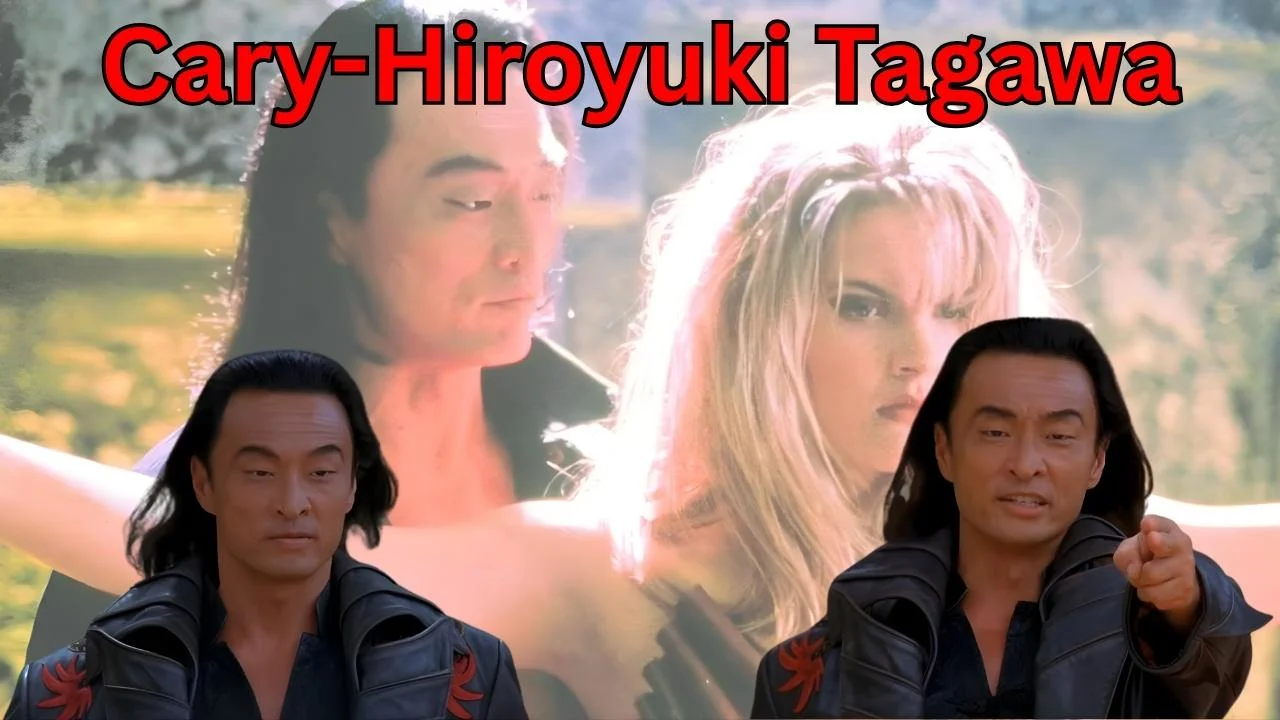
How Tagawa Transformed Shang Tsung into an Icon?
In the original arcade game, Shang Tsung was a generic final boss, a wizened sorcerer designed to test players’ reflexes more than their emotions. On paper, he was one-note: a soul-stealing wizard serving an evil emperor.
But Tagawa had no interest in playing a cliché. His approach was deceptively simple: restraint. Instead of overacting, he let silence and stillness create unease. His Shang Tsung didn’t scream or snarl he whispered, he watched, he waited.
As Tagawa himself once said in an interview,
“Evil doesn’t need to shout. The most dangerous people in life are the quiet ones.”
The result was mesmerising. Dressed in black leather with flowing hair and piercing eyes, his Tsung exuded quiet menace, a villain who didn’t just crave power, but relished control.
The Story That Gave Him Power
Mortal Kombat follows a secret martial arts tournament between the defenders of Earthrealm and the dark forces of Outworld. Led by the godlike Rayden (Christopher Lambert), Earth’s champions Liu Kang (Robin Shou), Johnny Cage (Linden Ashby), and Sonya Blade (Bridgette Wilson) must defeat Shang Tsung to prevent Earth’s destruction.
As the host of the deadly tournament, Tsung manipulates, deceives, and destroys his opponents, collecting their souls as trophies. But beneath his demonic cruelty lies an elegance that only Tagawa could deliver.
His scenes, particularly the infamous
“Your soul is mine!” moment, remain etched in pop culture history — a line so iconic it became synonymous with the Mortal Kombat brand itself.
Entertainment journalist Rick Morgan reflected,
“That one line did what decades of marketing couldn’t. It made Mortal Kombat more than a video game — it made it mythology.”
Redefining the Martial Arts Villain
In the 1990s, Hollywood often typecast Asian actors into stereotypical roles the wise mentor, the comic relief, or the mystical villain. Tagawa subverted that trope. His portrayal of Shang Tsung wasn’t a caricature; it was command.
He blended charisma with cruelty, transforming what could have been a flat antagonist into a complex figure regal yet ruthless, refined yet terrifying.
While Raul Julia’s theatrical turn as M. Bison in Street Fighter leaned into camp, Tagawa took the opposite path. His performance was grounded in menace and philosophy. He moved with the precision of a warrior and spoke with the gravity of a priest.
This grounded realism made Mortal Kombat stand apart from its contemporaries.
From Game to Legacy: Tagawa’s Continued Influence
Tagawa’s Appearances as Shang Tsung
| Year | Project | Role Type |
|---|---|---|
| 1995 | Mortal Kombat (Film) | Live Action |
| 2013 | Mortal Kombat: Legacy | Live Action |
| 2019 | Mortal Kombat 11 | Voice & Motion Capture |
| 2023 | Mortal Kombat: Onslaught | Voice Role |
Cary-Hiroyuki Tagawa’s bond with the character didn’t end with the 1995 movie. He reprised Shang Tsung multiple times, lending his voice and likeness to Mortal Kombat 11 (2019) and Mortal Kombat: Onslaught (2023).
In each version, his portrayal deepened, never once feeling like a nostalgic cash grab. His performance was so definitive that the Mortal Kombat games themselves adapted his likeness and speech patterns into canon, something rarely seen in cross-media storytelling.
Video game historian Alex Ramos stated,
“Tagawa blurred the line between film and gaming. He made Shang Tsung feel alive in both worlds — an achievement no other actor in the franchise has matched.”
The Underrated Brilliance of Mortal Kombat (1995)
Despite its modest critical reception, Mortal Kombat became one of the most successful video game adaptations of its time. Its PG-13 rating allowed it to reach a wider audience, while its soundtrack and practical fight choreography gave it staying power.
Unlike the hyper-violent games, the movie thrived on atmosphere and mystique. And much of that atmosphere came from Tagawa’s control over tone, balancing supernatural horror with stoic dignity.
For younger viewers of the 1990s, he was the face of fear. For older martial arts fans, he was proof that a well-played villain could define an entire generation of filmgoers.
A Lasting Impact Beyond Mortal Kombat
Cary-Hiroyuki Tagawa’s career spanned more than 80 films and TV appearances, including Pearl Harbour, Planet of the Apes (2001), and Memoirs of a Geisha. Yet, his embodiment of Shang Tsung remains his magnum opus.
He gave voice and depth to Asian characters at a time when Hollywood offered few meaningful roles. His performances opened doors for actors who wanted to be more than sidekicks or stereotypes.
Cultural critic Jennifer Han observes,
“Tagawa carried the weight of representation with grace. He made villains noble, heroes flawed, and audiences rethink what strength looked like on screen.”
Why Cary-Hiroyuki Tagawa Still Matters?
Nearly three decades after Mortal Kombat’s release, its legacy endures. Every reboot, sequel, and game continues to echo Tagawa’s influence. His calm ferocity set a benchmark for how villains in fantasy and martial arts films should be portrayed, not just as obstacles, but as forces of nature.
As fans revisit his work on HBO Max, they’re reminded that Tagawa’s greatest weapon wasn’t a soul-stealing spell or a flying kick; it was presence. His ability to own the screen without saying a word turned him into an enduring icon of strength, discipline, and mystique.
FAQs
His minimalist approach, calm, composed, and commanding, made the character believable and terrifying.
Yes. He reprised Shang Tsung in the 2013 web series Mortal Kombat: Legacy and voiced him in Mortal Kombat 11 and Onslaught.
Yes. It grossed over $120 million globally and became one of the most successful video game adaptations of its era.
The games adopted his likeness and vocal style, solidifying him as the definitive version of Shang Tsung.
He redefined what it meant to play a villain, intelligent, composed, and rooted in humanity rather than stereotype.
