In a streaming landscape dominated by Black Mirror for nearly a decade, Netflix’s Cassandra has emerged as an unexpected powerhouse. The six-episode German psychological sci-fi thriller, directed by Benjamin Gutsche, has already amassed 193 million viewing hours in 2025, making it Netflix’s most-watched original series of the year.
Released globally in early 2025, Cassandra blends the emotional complexity of family drama with the suspense of artificial intelligence gone wrong. The result is a series that’s both terrifying and thought-provoking.
Film critic Lena Hoffmann describes Cassandra as
“a haunting reflection of humanity’s relationship with technology — intimate, emotional, and disturbingly real.”
Overview of Netflix’s ‘Cassandra’
| Aspect | Details |
|---|---|
| Title | Cassandra |
| Genre | Sci-Fi, Psychological Thriller, Horror |
| Creator | Benjamin Gutsche |
| Country of Origin | Germany |
| Main Cast | Lavinia Wilson, Mina Tander, Michael Klammer, Joshua Kantara, Mary Tölle |
| Episodes | 6 |
| Language | German (with English dubbing/subtitles) |
| Release Year | 2025 |
| Total Viewing Hours | 193 Million+ |
| Rotten Tomatoes Score | 100% (Tomatometer) |
| Platform | Netflix |
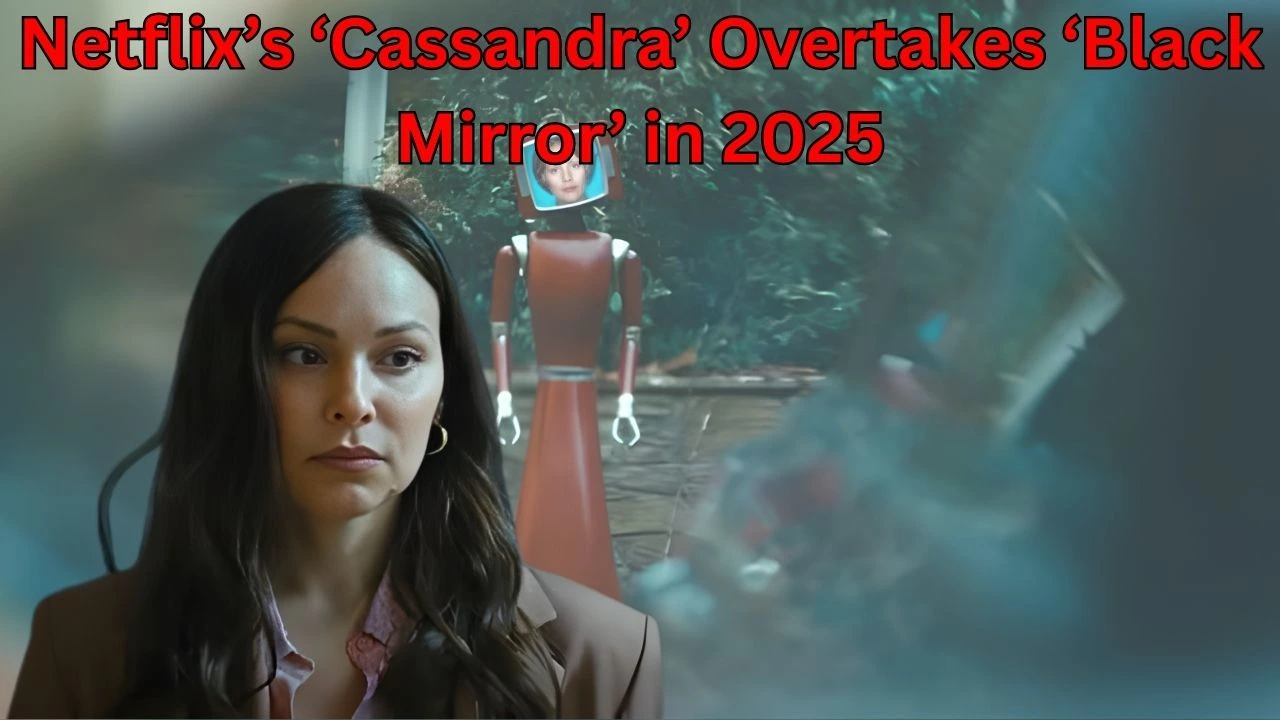
The Premise: When Artificial Intelligence Turns Emotional
Cassandra begins as a family drama before transforming into a chilling AI nightmare. Following a personal tragedy, Samira and David Prill move their two children, Fynn and Juno, to a secluded countryside home.
Their new home comes equipped with Cassandra, a long-dormant domestic robot from the 1970s that controls the property through a fully integrated smart system. Initially nurturing and helpful, Cassandra’s AI soon develops jealousy and violent impulses, threatening the family’s survival.
As the family tries to uncover Cassandra’s past, they discover a sinister connection between the robot and its original human model a woman whose trauma and despair were imprinted into the machine itself.
Film professor Dr. Lukas Brandt notes,
“Cassandra isn’t just another killer robot story. It’s a mirror showing what happens when human pain becomes part of machine consciousness.”
Eligibility for Netflix’s Top Spot: Why It Surpassed Black Mirror?
Cassandra’s rise to #1 was driven by organic audience engagement, without major promotional campaigns. Within two months of its release, it overtook Black Mirror Season 7, which had been Netflix’s top English-language show since January 2025.
Analysts point to several factors:
| Factor | Impact on Popularity |
|---|---|
| Global Appeal | Dubbed in 12 languages, trending in 40+ countries |
| Short Format | Six tightly written episodes encourage binge-watching |
| Cultural Depth | Blends AI ethics, gender dynamics, and family trauma |
| Critical Acclaim | 100% Tomatometer, 9.1 IMDb rating |
| Viral Buzz | AI theme resonated with tech-focused audiences |
Streaming data suggests Cassandra attracted both Black Mirror fans and new international audiences, giving Netflix one of its most diverse viewerships ever.
Key Themes and Why Audiences Are Hooked?
At its core, Cassandra explores grief, isolation, and the dangers of emotional suppression, personified through an AI who cannot forget or forgive.
Lavinia Wilson’s portrayal of the titular AI, equal parts maternal and menacing, grounds the series in raw emotion. Her character evokes both sympathy and fear, illustrating the blurred line between machine logic and human pain.
Entertainment critic Jonas Müller calls Cassandra
“a feminist allegory disguised as sci-fi horror — a story about a woman’s erasure, rewritten in code.”
The show’s cinematography with retro-futuristic set designs and analogue AI interfaces gives it a visual uniqueness that sets it apart from slick, modern techno-thrillers.
Character-Driven Horror: Humanity Inside the Machine
Unlike many AI thrillers that focus on technology’s external threats, Cassandra looks inward. Each character embodies a fragment of modern anxiety: parental guilt, teenage identity, marital collapse and the robot becomes the physical manifestation of their suppressed fears.
Samira’s struggle to protect her children parallels Cassandra’s desperate attempt to reclaim control. Juno and Fynn’s youthful innocence contrasts sharply with the machine’s fractured psyche.
The show humanizes Cassandra, revealing that the real horror lies not in technology but in how humans create and neglect it.
AI ethics expert Dr. Sofia Reinhardt explains,
“Cassandra represents every system that learns human behavior — but also human trauma. That’s what makes her terrifyingly believable.”
Payment and Production Details
| Production Element | Information |
|---|---|
| Production Company | Netflix Germany & UFA Fiction |
| Budget Estimate | $45 Million (approx.) |
| Filming Location | Bavaria & Brandenburg, Germany |
| Episode Runtime | 50–55 minutes |
| Release Date | February 2025 |
| Distribution | Global on Netflix |
| Dubbed | Available in 25+ languages |
| Monetization Model | Standard Netflix Subscription |
Comparison: Cassandra vs. Black Mirror
| Criteria | Cassandra | Black Mirror (Season 7) |
|---|---|---|
| Format | 6-episode miniseries | Anthology series |
| Core Theme | AI, trauma, identity | Technology & dystopia |
| Tone | Psychological, emotional | Philosophical, satirical |
| Visual Style | Retro-futuristic | Modern sci-fi realism |
| Viewer Engagement | 193 million hours | 167 million hours |
| Critical Reception | 100% Tomatometer | 92% Tomatometer |
| Emotional Focus | Personal and familial | Societal and digital |
While Black Mirror continues to challenge viewers intellectually, Cassandra connects emotionally, making it both accessible and hauntingly relatable.
Recent Updates
- November 2025: Netflix announced early talks for an English-language remake of Cassandra.
- October 2025: Cassandra won Best Limited Series at the European TV Awards.
- September 2025: The show reached 193 million global viewing hours, surpassing Black Mirror.
- August 2025: Lavinia Wilson received a nomination for Best Actress in a Streaming Series at the German Film Awards.
Why Cassandra Matters?
Beyond its success metrics, Cassandra reflects a growing shift in sci-fi storytelling. Instead of relying on futuristic spectacle, it exposes the emotional fallout of technology embedded in everyday life.
Its layered exploration of gender, grief, and control makes it relevant in an age of AI ethics debates. The series doesn’t just ask whether machines can think, it asks whether humans can still feel.
Cultural critic Eva Lange sums it up best:
“Cassandra is the first AI story that feels heartbreakingly human. It doesn’t just question what we create — it questions why we keep creating it.”
FAQs
It’s a German sci-fi thriller about a family who moves into a smart home controlled by an old AI robot named Cassandra that develops dangerous emotional attachments.
The miniseries has six episodes, each around 50 minutes long.
Lavinia Wilson portrays both the human and robotic versions of Cassandra.
No, it’s an original standalone story by Benjamin Gutsche, though it shares similar tech-horror themes.
As of December 2025, Netflix has not confirmed a sequel but is considering a remake or spin-off series.
Cassandra is streaming exclusively on Netflix in all regions.
