Cinema history is filled with passionate opinions, but few have aged as intriguingly as Quentin Tarantino’s public takedown of David Lynch’s Twin Peaks: Fire Walk with Me. It was 1992 Tarantino had just stunned audiences with Reservoir Dogs, and Lynch, already an established auteur, arrived at Cannes with a prequel to his cult TV series Twin Peaks.
The collision of these two creative powerhouses led to one of the most talked-about moments in film criticism. Tarantino didn’t just dislike Lynch’s film he outright dismissed the director’s future work, stating Lynch had “disappeared so far up his own ass” that he no longer cared to see anything else from him.
Today, that comment has become infamous, especially as Fire Walk with Me is now considered a bold, misunderstood masterpiece that humanized one of television’s most tragic characters.
Introduction to Twin Peaks: Fire Walk with Me
Released in 1992, Twin Peaks: Fire Walk with Me serves as a prequel to the groundbreaking TV series Twin Peaks. The film chronicles the final days of Laura Palmer (played by Sheryl Lee), the enigmatic teenager whose death launched one of television’s most puzzling mysteries.
“Lynch wasn’t lost in his own world; he was inviting us into Laura’s.” — Dr. Alicia Morgan, Film Psychologist
Unlike the quirky, small-town charm of the show, Lynch’s film was relentlessly dark exploring themes of abuse, trauma, and psychological decay. Fans expecting answers or closure instead found a nightmarish exploration of pain and loss.
At its Cannes premiere, the movie was booed. Critics called it self-indulgent and impenetrable. And one of the loudest detractors wasn’t just any critic it was Quentin Tarantino, the industry’s rising star.
Overview: Twin Peaks: Fire Walk with Me
| Feature | Details |
|---|---|
| Title | Twin Peaks: Fire Walk with Me |
| Director | David Lynch |
| Release Year | 1992 |
| Genre | Psychological Horror / Drama |
| Main Cast | Sheryl Lee, Kyle MacLachlan, Ray Wise |
| Setting | The final week of Laura Palmer’s life in Twin Peaks |
| Themes | Trauma, loss, identity, abuse, innocence, and corruption |
| Initial Reception | Booed at Cannes, criticized by fans |
| Current Status (2025) | Re-evaluated as one of Lynch’s best works |
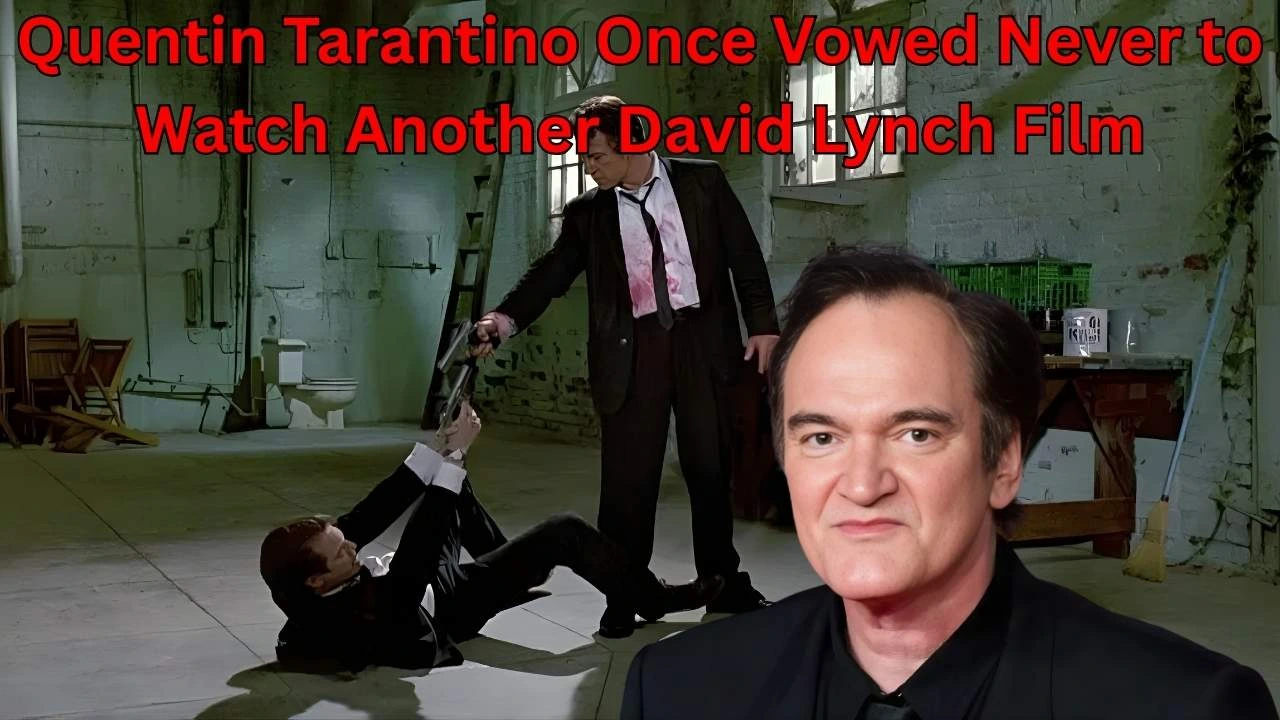
Quentin Tarantino’s Scathing Reaction
In an interview later that year, Tarantino didn’t mince words:
“David Lynch has disappeared so far up his own ass that I have no desire to see another David Lynch movie until I hear something different.” — Quentin Tarantino, 1992
At the time, Tarantino was riding high on Reservoir Dogs’ success and was being hailed as the next great American filmmaker. His confidence and brash honesty were part of his persona.
According to film historian Marcus Bell, Tarantino’s statement reflected “the rebellious filmmaker’s instinct to challenge anything that felt pretentious or emotionally inaccessible.”
However, what Tarantino may have perceived as indulgence, Lynch intended as emotional truth.
Why Tarantino Hated Fire Walk with Me?
Tarantino’s distaste likely stemmed from several key factors:
- Tone and Structure – Unlike the tightly scripted narratives Tarantino favors, Lynch’s film thrives on ambiguity and surrealism.
- Emotional Brutality – The depiction of sexual abuse and trauma in Laura Palmer’s story made audiences — and even critics — deeply uncomfortable.
- Fan Expectations – Many expected a continuation of the Twin Peaks mystery, not an introspective psychological horror.
Film critic Elaine Patterson reflects, “For a generation used to linear storytelling, Lynch’s movie felt like a betrayal. It wasn’t meant to comfort it was meant to confront.”
From Failure to Redemption: How Lynch’s Vision Was Vindicated?
Three decades later, Fire Walk with Me has undergone one of the most remarkable critical re-evaluations in modern cinema.
In the 1990s, it was seen as a confusing failure. But as audiences matured and Lynch’s later works like Mulholland Drive and The Straight Story gained acclaim the film’s emotional depth began to resonate more deeply.
Modern critics now view the film as a devastating study of trauma, exploring how a young woman’s private suffering is erased by society’s obsession with spectacle.
Film analyst Dana Roberts notes, “What Tarantino called self-indulgent is, in hindsight, Lynch at his most empathetic. He gave Laura Palmer her humanity back.”
How Fire Walk with Me Redefined Laura Palmer?
Before the film, Laura Palmer existed only as a symbol the perfect small-town girl turned victim. Lynch’s prequel shattered that illusion, showing the real person behind the mystery.
Through Sheryl Lee’s haunting performance, Laura becomes a tragic, complex figure struggling against forces of evil and her own fractured psyche.
“Lynch forced audiences to stop romanticizing trauma,” says professor Julian Cross, author of Dream Logic: The Cinema of David Lynch. “That’s what disturbed people most.”
By centering Laura’s pain rather than her murder, the film transformed how audiences think about female suffering in media.
The 1992 Cannes Controversy
At the Cannes Film Festival, expectations were sky-high. Lynch’s previous film, Wild at Heart, had won the Palme d’Or in 1990. Yet, when Fire Walk with Me premiered, it was met with boos and walkouts.
Many critics accused Lynch of losing his touch. Tarantino’s quote echoed the same sentiment: that the director had become too absorbed in his own strange world.
“Tarantino’s words reflect his youth — a filmmaker still obsessed with clarity and narrative dominance.” — Marcus Bell, Film Historian
But the Cannes crowd missed the point. Fire Walk with Me wasn’t designed to entertain; it was meant to expose the emotional horror behind the glossy mystery of Twin Peaks.
Tarantino’s 10-Movie Philosophy and Its Link to Lynch
Interestingly, Tarantino’s later decision to cap his career at ten films was partly inspired by what he perceived as decline in other directors’ careers including Lynch’s.
He once said, “Most filmmakers lose their fastball after a certain point. I don’t want to be one of them.”
In a way, his critique of Lynch became part of his own career ethos, one defined by control, precision, and calculated endings.
Yet, as time passes, Lynch’s seemingly “indulgent” explorations have proven more timeless than many structured Hollywood scripts.
Comparison: Early 1990s Reception vs. 2025 Critical View
| Aspect | 1992 Reaction | 2025 Re-evaluation |
|---|---|---|
| Critical Response | Negative, booed at Cannes | Widely acclaimed as a masterpiece |
| Audience Reaction | Confused, disappointed | Deeply emotional and appreciative |
| Cultural Impact | Considered a misstep for Lynch | Viewed as a defining work of feminist horror |
| Legacy | Overshadowed by Twin Peaks series | Central to understanding Lynch’s artistry |
Why It Matters?
In 2025, the Tarantino-Lynch story serves as a reminder of how art evolves and how opinions can age. Tarantino’s rejection of Fire Walk with Me reflects a larger truth: great art is often misunderstood in its time.
“Rewatching Fire Walk with Me now, it feels like a spiritual exorcism. It’s not indulgent; it’s necessary.” — Elaine Patterson, Film Critic
Today, Lynch’s film is studied in film schools, praised by modern directors like Ari Aster and Robert Eggers, and cherished for its emotional rawness.
Meanwhile, Tarantino’s own filmography has come to symbolise structure and mastery the opposite of Lynch’s dreamlike chaos.
Their contrast defines two philosophies of cinema: one grounded in control, the other in surrender to the subconscious.
FAQs
He found it overly self-indulgent and disconnected from traditional storytelling, calling it an example of a director losing perspective.
There’s no record confirming he did. If he kept his word, he might have missed out on Mulholland Drive and Lost Highway.
Audiences expecting a continuation of Twin Peaks were shocked by its dark tone and graphic depiction of trauma.
It’s now considered a misunderstood masterpiece that gives emotional depth to Laura Palmer’s story.
The film is currently available for streaming on HBO Max in the U.S.
