More than a decade after the original Spartacus ended, Starz has brought the Roman epic back to life. Spartacus: House of Ashur, created by Steven S. Knight, marks the first full-length revival of the franchise since Spartacus: War of the Damned aired in 2013.
The new sequel series resurrects one of the franchise’s most notorious characters, Ashur, played by Nick E. Tarabay, who was presumed dead in the original. Blending mythology and historical fiction, the show reimagines his story against the backdrop of ancient Rome’s underworld of power, lust, and betrayal.
But despite the hype and glowing critical reception, House of Ashur has become one of 2025’s most polarising releases.
Critics Praise the Return as a Bold, Character-Driven Epic
The series premiered with a 100% critic score on Rotten Tomatoes, earning widespread acclaim for its ambition and tone. Critics praised its mix of high-stakes drama, unapologetic violence, and emotional depth.
Film reviewer Angie Han of The Hollywood Reporter wrote,
“It’s promising that House of Ashur seems to understand that if it’s the NSFW pleasures that draw us in first, it’s the growing attachment to these characters and their lives that will keep us on the hook.”
Collider’s Jeff Ewing echoed that sentiment, calling the sequel a near miracle:
“Spartacus: House of Ashur essentially pulls off the miraculous, leaning on the mythological extravagances of ancient Roman belief to rewrite history and give a character a new lease on life.”
Spartacus: House of Ashur Rotten Tomatoes Overview
| Category | Score | Total Reviews |
|---|---|---|
| Critics’ Score | 100% (Certified Fresh) | 10 Reviews |
| Audience Score | 45% (Mixed/Negative) | 2,500+ Ratings |
| Premiere Date | November 29, 2025 | – |
| Platform | Starz | – |
| Next Episode | Dec 13, 2025 | – |
Critics argue the show retains the raw intensity of the original Spartacus while elevating its writing and mythology. However, fans are far less convinced.
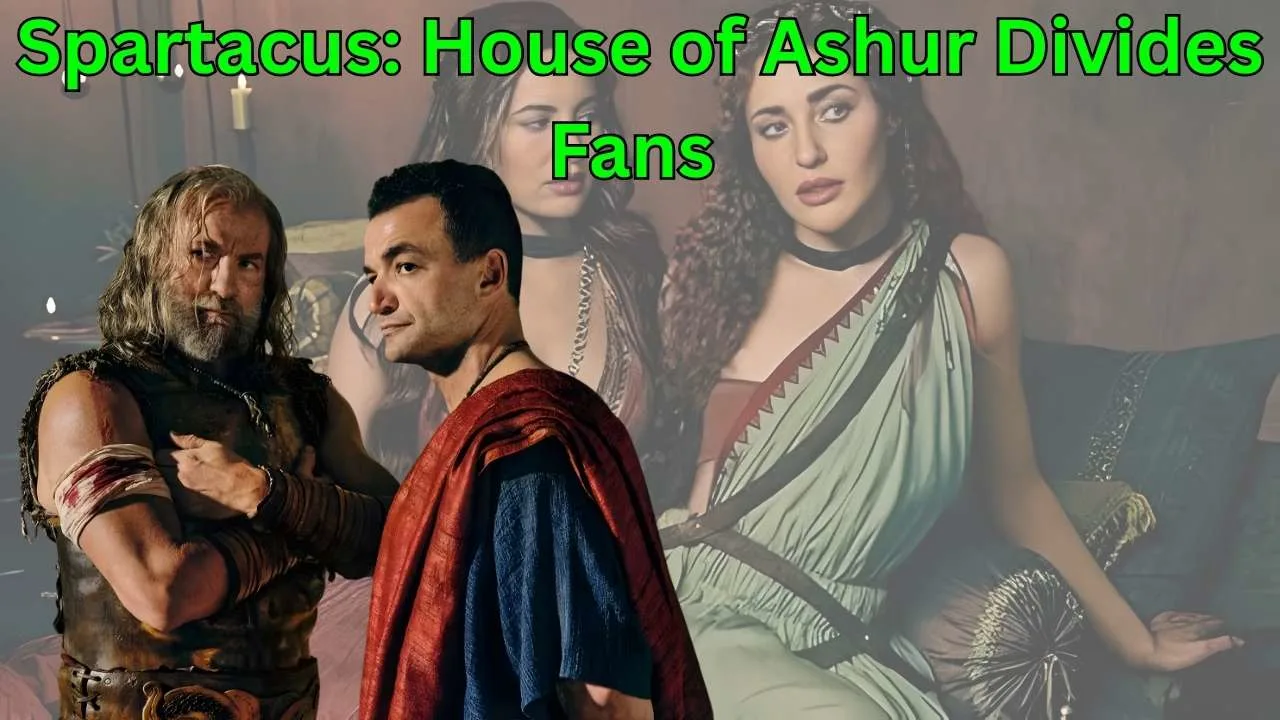
Audiences Lash Out: “Too Woke,” “Preachy,” and “Boring”
While critics celebrated House of Ashur as a triumph, the audience response told a very different story.
On Rotten Tomatoes, the audience score plummeted to 45%, with thousands of fans accusing the series of prioritising modern politics over compelling storytelling.
One viewer wrote,
“Show is a bore. I gave it a chance because the original Spartacus was amazing and, dare I say, better than Game of Thrones. This new show is just a woke mess.”
Another review claimed Rotten Tomatoes was censoring negative responses:
“Bad reviews are removed as ‘review-bombing.’ But if critics push woke politics, it’s all fine. House of Ashur is bad — plain and simple.”
A third viewer commented,
“Critics don’t care about good storytelling anymore. They just like anything that checks a woke box.”
The sentiment continued across social media, with many calling the show “Horrible woke garbage,” accusing Starz of “abandoning the grit and authenticity” that defined the original series.
TV analyst Nina Holland summarized the reaction succinctly:
“What we’re seeing is a cultural divide — critics are embracing House of Ashur as progressive myth-making, while longtime fans see it as a betrayal of what made Spartacus great.”
The Original Spartacus Set a Bloody, Unapologetic Benchmark
The backlash stems partly from nostalgia. When the original Spartacus premiered in 2010, it became one of Starz’s biggest hits, known for its extreme violence, explicit content, and operatic storytelling.
Spartacus Franchise Audience Scores
| Series | Audience Rating |
|---|---|
| Spartacus: Blood and Sand (2010) | 88% |
| Spartacus: Vengeance (2012) | 86% |
| Spartacus: War of the Damned (2013) | 86% |
| Spartacus: Gods of the Arena (2011) | 93% |
| Spartacus: House of Ashur (2025) | 45% |
The original show built a loyal fanbase for its blend of historical fiction and pulpy spectacle. It offered gladiatorial drama filled with blood, betrayal, and rebellion unfiltered and unapologetic.
Many fans argue that House of Ashur doesn’t carry the same raw energy. While it visually mirrors the earlier seasons, the tone has shifted toward introspection, philosophy, and moral complexity, changes that some viewers interpret as political posturing.
Entertainment columnist Ethan Morales explained,
“The new Spartacus is smarter, more self-aware, and deliberately modernised. But the same qualities that critics love are exactly what alienate its older fanbase.”
Why Fans Call It “Woke” and What That Really Means?
The “woke” criticism often reflects dissatisfaction with the show’s casting, themes, and tone.
In House of Ashur, women and minorities play more central roles in leadership and narrative agency. The series explores social hierarchies, slavery, gender politics, and religious exploitation more overtly than before.
For some, this evolution feels authentic to modern storytelling; for others, it feels like an agenda.
Film scholar Dr. Alex Romero observed,
“Fans who grew up with Spartacus’ raw masculinity may see this sequel’s moral and social awareness as dilution, but what’s really happening is genre evolution. It’s still about power — just reframed for a new generation.”
Starz executives have not commented directly on the “woke” criticism, but the show’s creative team has defended its direction, saying the franchise has always been about rebellion and justice, both timeless themes.
Revisiting the Character of Ashur
Bringing back Ashur, one of the series’s most cunning antagonists, was a risky move. In the original Spartacus, Ashur was a schemer, a former gladiator who manipulated his way into favour with Roman elites.
In House of Ashur, his resurrection is explained through ancient mysticism and Roman mythology, a creative decision that split fans once again.
Critics praised the bold reimagining, calling it “Shakespearean” and “a mythic rebirth,” while detractors found it forced and implausible.
Yet, few can deny Nick E. Tarabay’s performance anchors the show. His charisma and menace carry scenes even when the script divides opinion.
The Cultural Divide: Critics vs. Fans
The Spartacus: House of Ashur debate echoes recent patterns across entertainment, where critic and audience reactions differ sharply.
Similar polarisation occurred with The Rings of Power, The Last of Us Part II, and The Marvels. Critics praised depth and progressiveness; fans accused studios of prioritising ideology over story.
Cultural critic Jeremy Cole summarized the issue:
“This isn’t just about one show. It’s a clash between evolving storytelling values and nostalgia for unfiltered escapism. Spartacus is just the latest battlefield.”
What’s Next for Spartacus: House of Ashur?
Despite its divisive reception, House of Ashur continues to draw strong viewership numbers on Starz and streaming platforms. The series premiered with a two-episode launch and will air weekly through January 30, 2026.
Starz reportedly remains confident in the franchise’s future, with early discussions for Season 2 already underway.
“This series isn’t about pleasing everyone,” said showrunner Steven S. Knight in a recent interview. “It’s about pushing Spartacus into new territory — where myth, morality, and madness meet.”
Why Spartacus: House of Ashur Still Matters?
Regardless of its controversies, House of Ashur proves one thing: Spartacus still has cultural relevance. The series continues to push boundaries in storytelling, production design, and character exploration.
Whether it’s a misunderstood masterpiece or a misguided revival, the conversation surrounding it reflects a broader truth: audiences still crave bold, provocative television.
As Angie Han wrote in her review,
“If it’s the spectacle that draws us in, it’s the emotional stakes that keep us there. House of Ashur dares to find both.”
FAQs
It follows the return of Ashur, a resurrected gladiator navigating the brutal politics and mysticism of ancient Rome.
Some viewers believe the show focuses too heavily on progressive social themes rather than traditional storytelling.
Critics: 100%; Audience: 45% (as of December 2025).
Nick E. Tarabay reprises his role as Ashur, with new cast additions under showrunner Steven S. Knight.
New episodes premiere every Friday on Starz until the finale on January 30, 2026.
